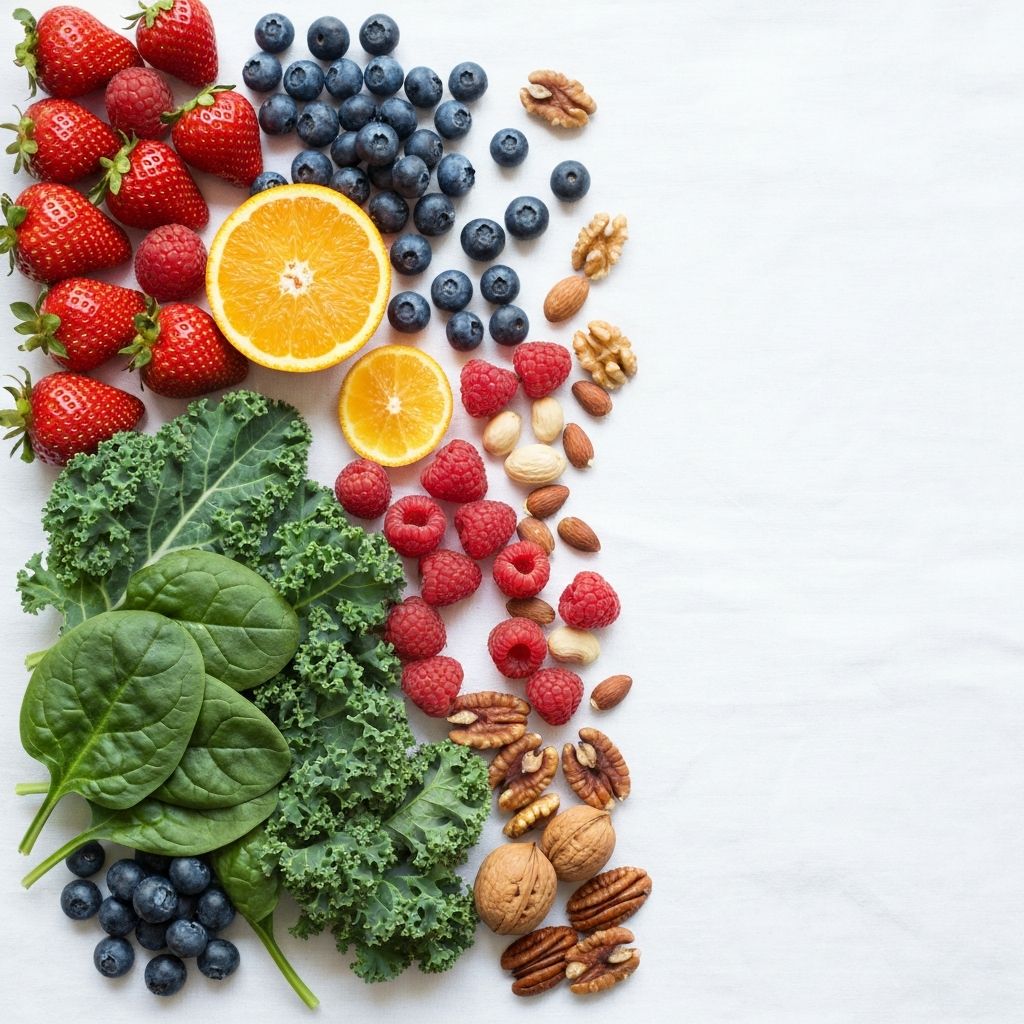
Fat-Soluble Vitamins
The four fat-soluble vitamins each fulfil distinct and well-characterised roles in human physiology. Their solubility in lipids means they are absorbed alongside dietary fat in the small intestine and can accumulate in body tissues over time.
Vitamin A (Retinol / Beta-Carotene)
Plays a fundamental role in maintaining the integrity of epithelial tissues — including the skin and the mucous membranes lining the respiratory and gastrointestinal tracts. Also serves a critical function in the visual cycle, specifically in the regeneration of rhodopsin, the photosensitive pigment in rod cells of the retina. Found as preformed retinol in animal liver, dairy products, and eggs; found as the precursor beta-carotene in orange and yellow plant foods such as carrots, sweet potato, and leafy greens.
Vitamin D (Calciferol)
Uniquely among vitamins, vitamin D can be synthesised endogenously by the skin upon exposure to ultraviolet B radiation from sunlight. It functions in the body as a steroid hormone precursor, with its active form (calcitriol) regulating the absorption of calcium and phosphate in the intestines. These minerals are fundamental to skeletal mineralisation and neuromuscular function. Dietary sources include oily fish, egg yolks, and fortified foods. Given the limited sunlight at northern latitudes, particularly in the United Kingdom during winter months, dietary and supplemental sources merit consideration in nutritional assessments.
Vitamin E (Tocopherol)
Acts primarily as a fat-soluble antioxidant, protecting cell membranes from oxidative damage by neutralising free radicals — highly reactive molecules that can disrupt cellular structures. It also plays a role in immune function and metabolic processes. Found in highest concentrations in vegetable oils (particularly wheat germ oil and sunflower oil), nuts, seeds, and green leafy vegetables. Vitamin E exists in eight different molecular forms, with alpha-tocopherol being the most biologically active in humans.
Vitamin K (Phylloquinone / Menaquinone)
Essential for the biosynthesis of several proteins involved in the blood coagulation cascade, including prothrombin. It also has a well-characterised role in bone metabolism, where it is required for the carboxylation of osteocalcin — a protein involved in bone mineralisation. Vitamin K1 (phylloquinone) is found in green leafy vegetables such as kale, spinach, and broccoli. Vitamin K2 (menaquinone) is present in fermented foods such as natto and some cheeses, and is also produced by intestinal bacteria.
Water-Soluble Vitamins
The water-soluble vitamins comprise the B-complex group and vitamin C. Because these vitamins are not stored appreciably in the body, they are excreted in urine when present in excess, and regular dietary intake is important for maintaining adequate status.
| Vitamin | Primary Physiological Role | Notable Food Sources |
|---|---|---|
| B1 (Thiamine) | Coenzyme in carbohydrate metabolism; nerve function | Wholegrains, legumes, pork |
| B2 (Riboflavin) | Component of flavin coenzymes; energy metabolism | Dairy, eggs, lean meats, leafy greens |
| B3 (Niacin) | NAD/NADP coenzyme synthesis; cellular energy production | Poultry, fish, wholegrains, peanuts |
| B6 (Pyridoxine) | Amino acid metabolism; neurotransmitter synthesis | Poultry, fish, bananas, potatoes |
| B9 (Folate) | DNA synthesis and repair; single-carbon transfer reactions | Dark leafy greens, legumes, fortified cereals |
| B12 (Cobalamin) | Myelin synthesis; red blood cell formation; DNA metabolism | Meat, fish, dairy, eggs; fortified plant foods |
| C (Ascorbic Acid) | Collagen synthesis; antioxidant; enhances non-haem iron absorption | Citrus fruits, berries, bell peppers, broccoli |
Essential Dietary Minerals
Minerals are inorganic elements required in defined quantities for normal physiological function. They are broadly divided into macrominerals — required in larger amounts (calcium, phosphorus, magnesium, sodium, potassium, chloride, sulphur) — and trace minerals (or trace elements) — required in much smaller quantities (iron, zinc, copper, manganese, iodine, selenium, fluoride, chromium, molybdenum).
Calcium
The most abundant mineral in the body, with approximately 99% stored in bones and teeth in the form of hydroxyapatite crystals. Calcium also plays essential roles in muscle contraction, nerve signal transmission, and blood clotting. Principal dietary sources include dairy products, fortified plant-based alternatives, and certain leafy green vegetables. Calcium absorption is influenced by vitamin D status and the presence of oxalates and phytates in foods.
Iron
A trace element with a central role in oxygen transport. Iron is a constituent of haemoglobin — the protein in red blood cells responsible for binding and transporting oxygen — and of myoglobin in muscle tissue. Two forms exist in food: haem iron (from animal sources, higher bioavailability) and non-haem iron (from plant sources, more variable bioavailability). Absorption of non-haem iron is enhanced by the concurrent intake of vitamin C and inhibited by phytates, polyphenols, and calcium.
Zinc
A trace element involved in the catalytic activity of hundreds of enzymes. Zinc plays roles in protein synthesis, cell division, DNA synthesis, immune function, and wound healing. It is also critical for the senses of taste and smell. Rich dietary sources include red meat, shellfish, legumes, seeds, and wholegrains. As with iron, the bioavailability of zinc from plant sources is reduced by phytates.
Magnesium
Involved in more than 300 enzyme-catalysed reactions in the body, including those involved in protein synthesis, muscle and nerve function, blood glucose management, and the production of ATP — the primary cellular energy molecule. Magnesium is also important for structural integrity of bones and teeth. Dietary sources include wholegrains, legumes, nuts, seeds, and green leafy vegetables.